
Permits Required to Build an Industrial Facility in Querétaro
Updated
Original Spanish article: April 13, 2026.
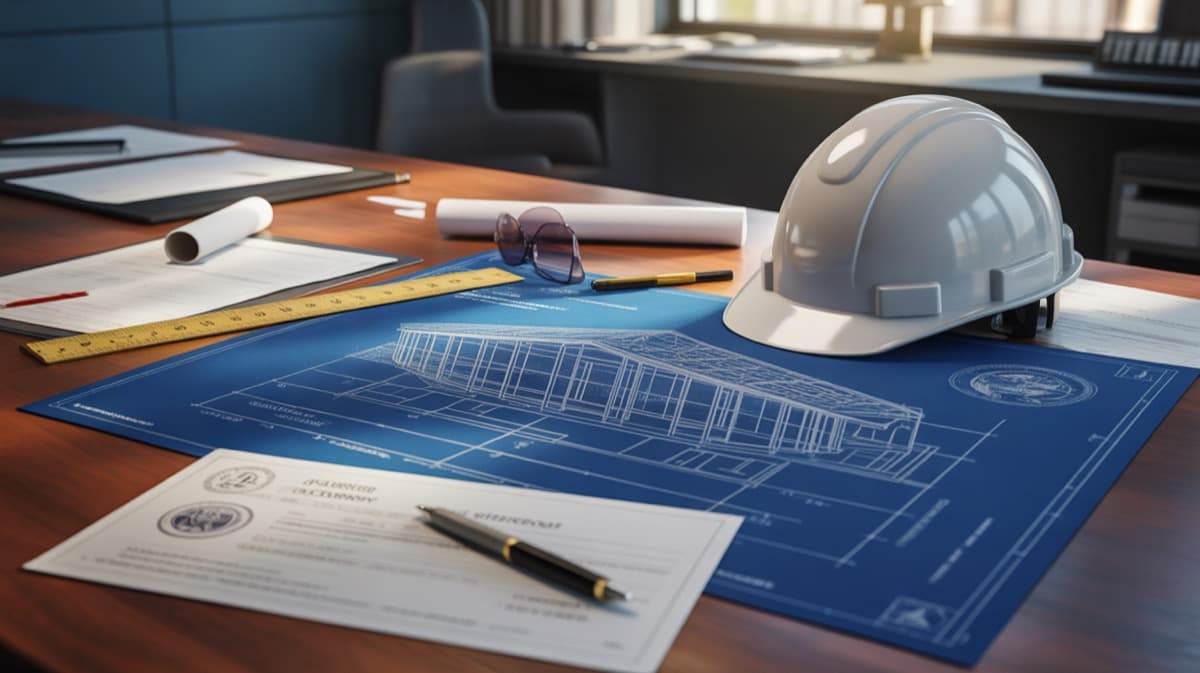
Building an industrial facility in Querétaro involves more than construction. Municipal, state, or federal authorities may participate before, during, and after the work. Jurisdiction and sequence depend on the property, business activity, and scope.
This guide explains the principal procedures normally required to build an industrial facility in the municipalities along Querétaro's industrial corridor—El Marqués, Corregidora, Colón, and the state capital—based on public information from municipal governments and the competent authorities.
Important note: Exact requirements, documents, time frames, and costs vary according to the municipality, industrial activity, property location, and project size. This guide is for informational purposes and does not replace advice from a Director Responsable de Obra (DRO, Registered Construction Manager) or the urban-development department of the corresponding municipality. Always verify current requirements with the local authority before beginning any procedure.
1. Land-Use Ruling
The Land-Use Ruling (Dictamen de Uso de Suelo) is the document issued by the municipality's Urban Development Department confirming that the planned industrial activity may be conducted on your property. It is one of the first steps in the process because it establishes whether the project is viable at that location.
Being inside an industrial park should not be treated as an automatic exemption. Before acquiring or designing, request the applicable certificate, ruling, or land-use record from the municipality and confirm that the activity, intensity, and project conditions are compatible with the property.
When applicable, the ruling contains information on roads, parking, green areas, maneuvering areas, density, authorized uses, and conditions that are subsequently reflected in the Construction License.
In other municipalities along the industrial corridor, including El Marqués, Corregidora, and Colón, the specific requirements for this procedure are established in each municipality's regulations and should be confirmed directly with the corresponding Urban Development Department.
2. Construction License for Industrial Use
The Construction License is the municipal permit authorizing the owner or legal representative to build, expand, repair, demolish, or regularize a structure on the property. It is the central authorization required to begin construction.
For the municipality of Querétaro, the starting point is the Construction Regulations published by the municipality and the current procedure information sheet. Before filing an application, confirm:
- The authority and application type that apply to the proposed work.
- The required documents, responsible professionals, drawings, studies, and payments.
- The authorization's validity period and the procedure for extensions or modifications.
- The approved deliverables that must be kept at the jobsite.
El Marqués, Corregidora, Colón, and the other municipalities apply their own regulations, procedure sheets, and revenue laws. A list of requirements from the state capital should not be reused as though it applied throughout the state.
Each municipality publishes its specific requirements, forms, and current costs on its official portal. Since revenue laws are updated annually, exact costs should be confirmed directly with the municipality when the application is made.
3. Director Responsable de Obra (DRO)
The Director Responsable de Obra (DRO, Registered Construction Manager) and, where applicable, specialist co-signatories or consultants perform the functions assigned to them by the applicable regulations. The municipal authority must confirm which roles the project requires.
It is not appropriate to state that the same professional responsibility applies to every construction project in the state. The project type, floor area, use, risk, and municipality can change the responsible professionals and documents required.
When a professional sign-off is required, verify directly with the municipality that the professional registration is current and covers the specialty and scope of the work.
If you hire a contractor with industrial experience, it will normally have its own DRO or a direct relationship with an accredited professional. If you manage the project independently, you will need to hire one separately.
4. Environmental Impact Assessment
Construction of an industrial facility may require an environmental impact assessment. This is where federal and state jurisdiction must be distinguished.
Federal jurisdiction: SEMARNAT
An Environmental Impact Statement (Manifestación de Impacto Ambiental, MIA) filed with the Ministry of Environment and Natural Resources (SEMARNAT) is mandatory when the project falls within the cases established by the General Law of Ecological Balance and Environmental Protection (LGEEPA) and its environmental impact assessment regulations: certain industrial activities, work in federal zones, protected natural areas, land-use changes on forest land, and other specified cases.
The type of filing, study, and competent authority must be determined according to the legal criteria and project characteristics; they are not selected merely because the project is an industrial building.
State and municipal jurisdiction
When a project does not fall under federal jurisdiction, environmental review belongs to the state or municipal authority under the environmental laws of the State of Querétaro. This generally involves filing a study or report with the state's Ministry of Sustainable Development (SEDESU) or the environmental department of the corresponding municipality.
Determining which authority has jurisdiction is one of the first steps a DRO or environmental consultant should confirm because it defines the project's entire environmental permitting plan.
5. Civil Protection Approval
The Municipal Civil Protection Coordination Office participates both during the design phase and when the facility begins operating. Depending on the municipality, it may require a preliminary construction opinion, risk analysis, internal civil-protection program, and later a no-objection letter or safety ruling before operations begin.
The time frame and studies depend on the risk, completeness of the file, inspections, and current procedure. Request the applicable information sheet from the authority before assigning a duration in the schedule.
Before operations begin, confirm which Civil Protection authorizations and rulings are prerequisites for the operating license or notice applicable to the business activity and municipality.
6. Utility connections
In addition to construction permits, parallel procedures are required to connect the facility to basic utilities:
- Electricity (CFE): The electrical service connection is processed through the Federal Electricity Commission. For industrial loads at medium voltage, the process includes a feasibility study, an electrical design reviewed by CFE, installation of the service connection, and contracting. Time frames vary according to the requested load and infrastructure available in the area.
- Water and drainage: These connections are processed through the State Water Commission (CEA) or the utility operator corresponding to the municipality. When the industrial park has its own network and treatment plant, coordination takes place through the park.
- Wastewater discharge: Depending on the industrial activity and process contaminants, a specific permit may be required from CONAGUA when discharge enters federally regulated water bodies, or from the state or municipal operator when discharge enters the public network.
7. Completion of Work and Operating License
Once construction is complete, the permitting cycle closes with two steps:
Certificate or Notice of Completion of Work
Upon completion, the owner and the corresponding responsible professionals must complete the closeout process established by the municipal authorization and submit the documentation required under the current procedure.
Municipal Operating License
The path to begin operations depends on the business activity and municipality. Confirm which license, notice, rulings, and registrations are needed and which can be processed in parallel.
One-stop offices and simplified procedures
Some municipal portals provide one-stop offices or simplified paths, but their scope and eligibility change. An industrial facility should not be assumed to qualify: confirm in the current procedure information which uses, floor areas, and application types the available mechanism accepts.
These mechanisms shorten processing times when a project has low complexity, although large industrial projects generally require specialized administration because of the number of authorities involved.
Logical sequence of procedures
Although the exact path varies by project, a typical sequence is:
- Land-use verification and, when applicable, a Land-Use Ruling.
- Determination of environmental jurisdiction and, where applicable, filing of an MIA with SEMARNAT or a state or municipal assessment.
- Engagement of the DRO and preparation of construction documents—architectural, structural, and building systems.
- Preliminary Civil Protection rulings when applicable.
- Application for a Construction License from the municipality.
- Utility-connection procedures for CFE, water, and drainage.
- Execution of the work under DRO supervision and a signed construction log.
- Notice of Completion of Work.
- Application for a Municipal Operating License.
Practical recommendations
- Always verify with the municipality. Requirements, forms, and costs change each year with municipal revenue laws. Confirm current information before budgeting time and expenses.
- Involve the responsible technical professional from the beginning. The applicable role can anticipate requirements and prevent corrections during the application process.
- Build the schedule from official information. Use current procedure sheets and each authority's response to set durations and dependencies, not a generic time frame.
- Work with a contractor that has local experience. Every municipality has its own operating dynamics. A contractor that has managed recent projects in the area understands actual time frames and the right contacts.
Understanding the permitting map is as important as understanding the facility's design. Industrial projects that fall behind rarely do so because of the physical work; they do so because permits were poorly managed. With a clear road map and the right support, the regulatory process stops being an obstacle and becomes a natural part of the construction schedule.
Official sources
- Municipality of Querétaro: Construction Regulations.
- Chamber of Deputies: General Law of Ecological Balance and Environmental Protection.
For a project at Industrialix, our scope can include permitting support and coordination alongside design and construction. Each approval rests with the park or the competent authority; a project review helps define documents and responsibilities without promising authorization.
Ready to start your project?
Contact us for a personalized quote. Our team of experts is ready to help.
Request a QuoteRelated Articles
Build-to-Suit (BTS): Meaning and Benefits
What build-to-suit (BTS) means in industrial real estate, how it compares with a speculative building, its pros and cons, and when it makes sense.
How to Choose the Right Industrial Park for Your Facility
How to evaluate an industrial park before building: electricity, water, soil, access, regulations, services, and occupancy costs.
Cold Storage: What Changes Versus a Dry Industrial Building
What sets a temperature-controlled building apart: continuous envelope, freezer floor, doors, machine room, fire protection, power, and a controlled pull-down.