
Build-to-Suit (BTS): Meaning and Benefits
Updated
Original Spanish article: April 20, 2026.
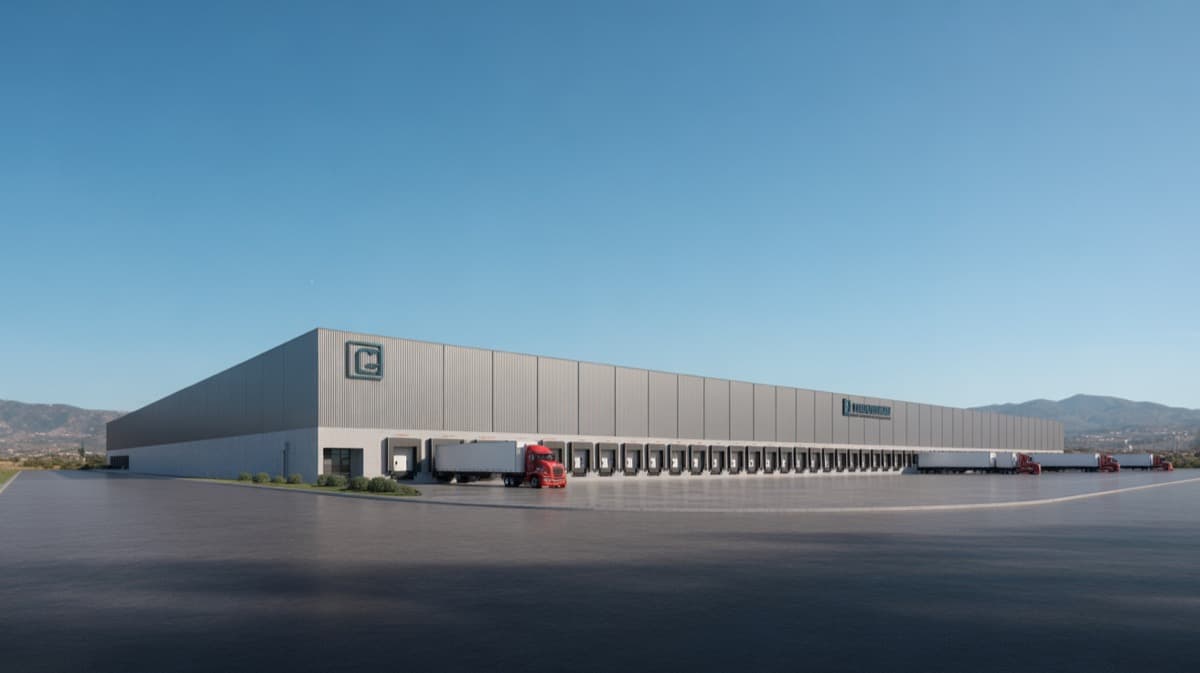
A company looking to establish or expand operations may find available properties that do not match its process, utilities, or schedule. Availability and vacancy change by submarket and period, so they must be verified through a current market study.
This is where the Build-to-Suit (BTS) model comes in: an industrial facility designed from the ground up for a specific company and process. This guide explains what it is, how it works, how it compares with speculative buildings, and when it makes sense to choose this path.
What is a Build-to-Suit industrial facility?
A Build-to-Suit facility—literally, one "built to suit"—is an industrial property developed around the specific requirements of an identified client before construction begins. Unlike a speculative building, which is built without a defined end user, a BTS has a recipient from the outset: its design, dimensions, building systems, and finishes are defined around a particular production process.
The BTS model can be structured in two principal ways:
- Leased BTS: A developer or investor builds the facility, and the client leases it for the term and under the conditions negotiated. The contract may include additional options, but there is no universal lease term.
- BTS for sale or direct ownership: The client hires a contractor to build the facility on land it owns or has acquired for the project. The arrangement is turnkey, and the client retains ownership.
In both cases, the essence of the model is the same: the project is defined before construction, and the facility responds to real operational needs rather than market averages.
Build-to-Suit vs. speculative building
Speculative buildings—also called inventory or spec buildings—are constructed by real-estate developers without a committed tenant. Their design targets an average market profile: standard heights, common spans, and typical logistics docks.
A quick comparison of the two models:
| Criterion | Build-to-Suit | Speculative building |
|---|---|---|
| Design | Tailored to the client | Market standard |
| Time to occupancy | Includes definition, design, permits, and construction | Depends on inventory and required improvements |
| Operational fit | Defined from the user's program | Constrained by the existing property |
| Improvement cost | Allocated according to the contract and scope | Negotiated between owner and user |
| Availability | Depends on land, permits, and financing | Depends on current submarket inventory |
The mix of Build-to-Suit and speculative developments changes with the real-estate cycle. A decision should be supported by a market report identified by source, submarket, and date, distinguishing completed inventory, construction, and announcements.
Advantages of the Build-to-Suit model
1. Design tailored to the process
The most obvious advantage is that the building is created for what your company actually does, not for what the market thinks someone might do. This translates into:
- Clear height calculated around racking, overhead cranes, or manufacturing equipment.
- Structural spans defined by the production layout.
- Floor load capacity based on the actual machinery.
- Docks sized for the specific logistics volume.
- Electrical, plumbing, and data infrastructure matched to the process.
2. Strategic location
With a BTS, you can select the property based on logistics flows, proximity to suppliers, access to highway corridors, and labor availability. You do not have to adapt to existing inventory. If you are evaluating locations, read our guide on how to choose the right industrial park for your facility.
3. Cost predictability
A mature set of construction documents makes it easier to identify the scope, compare proposals, and agree on how changes and contingencies will be managed. It does not, by itself, eliminate price changes, unforeseen conditions, or later user decisions.
4. Energy efficiency and sustainability from the design stage
It is much easier to incorporate insulated envelopes, daylighting, solar panels, LED lighting, or water-recovery systems when designing from the ground up than it is to retrofit them into an existing building.
5. Compliance with industry-specific requirements
For industries with particular regulatory requirements—food, pharmaceuticals, medical devices, and automotive—a BTS makes it possible to incorporate the standards required by each industry from the beginning instead of modifying a building designed for generic uses.
Disadvantages and considerations
The BTS model is not always the best option. Evaluate these points before deciding:
- Delivery schedule. A BTS requires definition, design, permitting, contracting, and construction. Compare that program with the actual startup date; do not use a generic duration.
- Long-term commitment. Under a lease structure, contracts typically run for several years. For operations with an uncertain horizon, a speculative building under a short-term lease may be a better option.
- Initial investment under an ownership structure. If you build on your own land, you need capital or financing for the project. A leased BTS structure spreads this cost over time.
- Quality of the construction partner. The success of a BTS depends entirely on the team that designs and builds it. A contractor without industrial experience can turn a good design into a project full of corrections. If you are evaluating alternatives, read our guide on how to choose the right industrial contractor.
When does Build-to-Suit make sense?
The BTS model is especially appropriate when one or more of the following conditions apply:
- The operation has technical requirements that are difficult to find in existing inventory: particular spans or heights, special-load floors, clean areas, cold rooms, or process utilities.
- The business requires specific certifications that call for a dedicated design: FDA, COFEPRIS, IATF 16949, LEED, ISO 22000, among others.
- There are plans for modular growth over the medium term: a BTS can be designed with clearly defined expansion phases from the outset.
- The location is strategic: when the specific property or industrial park provides logistics value that offsets the construction time.
- The market does not offer suitable alternatives: after comparing current inventory with the operation's program, improvements, and schedule.
When is a speculative building a better option?
A speculative or inventory building may be a better choice if:
- You need rapid occupancy and your technical requirements are standard.
- The operating process fits standard facilities without difficulty—distribution centers, finished-goods warehouses, or e-commerce operations.
- The project's horizon is short or uncertain, making a long-term commitment inappropriate.
- Mobility and lease flexibility take priority over operational optimization.
How a Build-to-Suit project is developed
A typical BTS process includes the following stages:
- Definition of requirements. The client and contractor jointly develop the architectural program: areas, flows, capacities, special building systems, and future growth.
- Site selection or validation. Soil mechanics, utility feasibility, land-use validation, and review of the industrial park's regulations.
- Concept design and cost estimate. A conceptual design with a preliminary budget that supports the decision on whether to proceed.
- Construction documents. Architectural, structural, building-systems, and finish drawings, typically coordinated through the BIM methodology.
- Procedures and permits. Construction license, environmental and civil-protection rulings, and utility connections.
- Construction and supervision. Execution of the work with a Director Responsable de Obra (DRO) and ongoing quality control.
- Handover and commissioning. Certificate of completion, building-systems testing, and startup of operations.
Conclusion
The Build-to-Suit model may be appropriate when the value of designing for the operation outweighs the time, contractual commitment, and investment required. That conclusion should be tested against real inventory and improvement alternatives.
The decision between a BTS and a speculative building is not a question of "better or worse," but of fit with the operation's time frame, technical requirements, and planning horizon. What matters is making the decision with the facts in hand and with a construction partner capable of executing either path reliably.
For the design and construction of a purpose-built facility, explore our architecture, engineering, BIM and construction services. Ownership, financing and leasing arrangements must be defined separately with the relevant parties.
Ready to start your project?
Contact us for a personalized quote. Our team of experts is ready to help.
Request a QuoteRelated Articles
Permits Required to Build an Industrial Facility in Querétaro
Permitting path for an industrial facility in Querétaro: land use, municipal license, professionals, environmental review, civil protection and utilities.
Wind on Industrial Buildings: Roofs, Doors and Fasteners
Why wind lifts an industrial building's roof, what happens when a large door stays open, and what to check at corners, edges and rooftop equipment.
Cold Storage: What Changes Versus a Dry Industrial Building
What sets a temperature-controlled building apart: continuous envelope, freezer floor, doors, machine room, fire protection, power, and a controlled pull-down.