
Industrial Building Maintenance: What to Inspect and When
Updated
Original Spanish article: May 11, 2026.
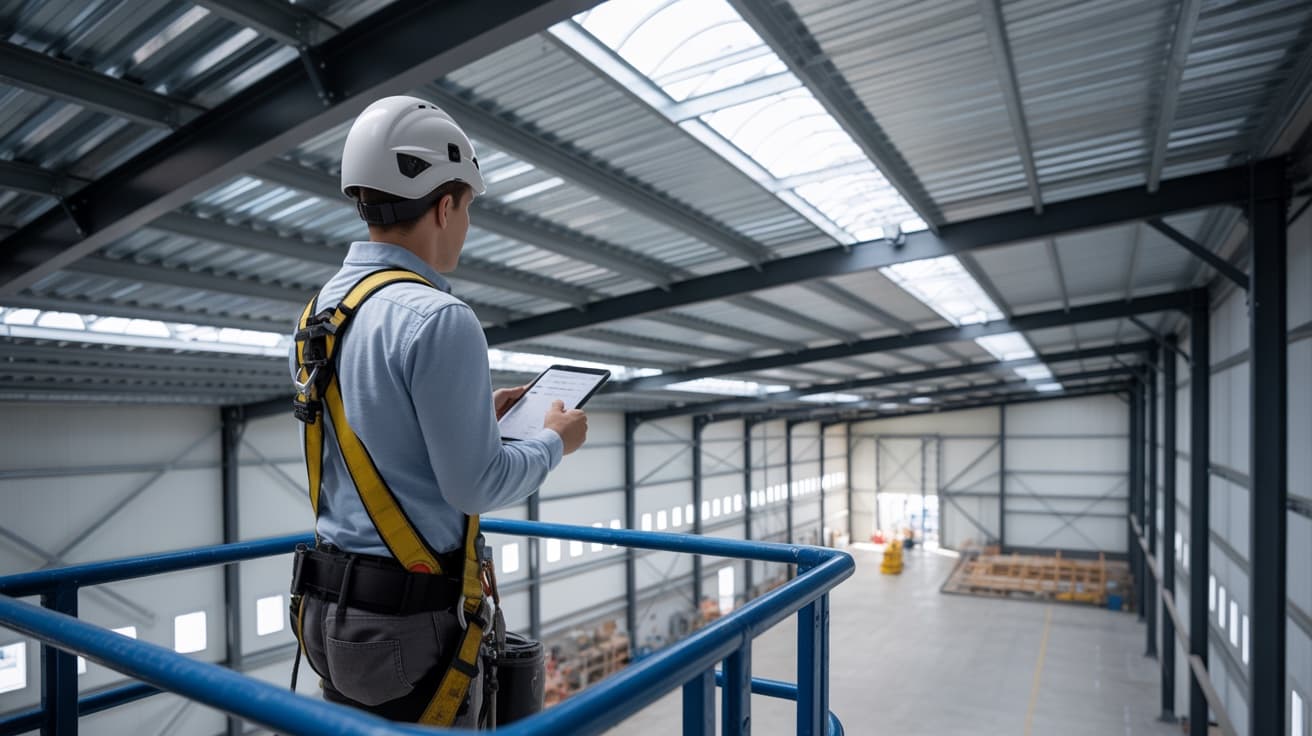
Handover of an industrial building is not the end of the project. It is the beginning of the building's service life, which can reach 30, 40, or more years with some care. With neglect, it can begin developing problems in less than five.
Preventive maintenance for an industrial building is not complicated, but it requires discipline. Most serious failures give warnings before they occur. The question is whether anyone is looking.
Here is what should be inspected, how often, and why.
Why maintenance matters (and it is not only about cost)
Three reasons preventive maintenance delivers a return:
- Repair cost. A loose connection bolt found in time takes minutes to correct. A failed connection that forces part of the structure to be shored takes weeks and a great deal of money.
- Operational continuity. A roof leak over a production line can stop operations. Roof maintenance protects continuity, not appearance.
- Actual service life. A well-maintained industrial building reaches its third or fourth decade in good condition. A neglected one begins losing value much sooner.
The maintenance plan should be delivered with the building, ideally with a physical or digital log ready for use from day one.
Steel structure: what to inspect and when
The structure supports everything. It is inspected less frequently than other components, but the inspections must be thorough.
- Annually: a general visual inspection of columns, trusses, beams, and bracing. Look for corrosion, deformation, and impacts to perimeter columns (forklifts are the primary enemy).
- Annually: inspection of bolted connections in accessible areas. Verify torque at critical points.
- Every 3 to 5 years: a detailed review by specialized personnel, ideally the original contractor or a structural engineering firm. This includes checking welded connections in critical areas and the condition of base plates and anchors.
- As applicable: repainting or anticorrosion treatment in high-humidity areas, saline environments, or chemical processes. Anticorrosion coatings have a finite service life.
Warning signs that require immediate review include corrosion on base plates, visible deformation in beams, unusual noises under load (a roof creaking during heavy rain, for example), or any forklift impact to columns.
Roof and drainage: the system most exposed to weather
The roof moves the most as temperatures change and is directly exposed to rain, hail, and dust. That is why it benefits so much from maintenance.
- Before and after the rainy season: thoroughly clean gutters, downspouts, and drains. A downspout clogged with leaves and dust is the most common cause of roof leaks.
- Every six months: visually inspect the roof panels (corrugated sheet, KR18, or sandwich panel), looking for corrosion, hail damage, loose fasteners, or raised seams.
- Annually: inspect seals at laps, perimeter flashings, skylight flashings, and penetrations (exhaust fans and process lines that pass through the roof).
- Every 3 to 5 years: thoroughly assess the roof-panel coating and consider touch-ups or localized replacement.
A leak is almost never directly above the stain seen indoors. Water travels along the structure and drops several meters away. It is worth investigating patiently and from above.
Industrial floor: small measures, major difference
The floor has already been poured and cannot be rebuilt easily. It can, however, be cared for so that it does not deteriorate prematurely.
- Monthly: visually inspect joints. Look for failed sealant, accumulated dirt, and spalled edges.
- Annually: reseal joints as needed. Unsealed joints provide the fastest route for water or oil to reach the subgrade.
- Annually: inspect cracks. A fine, stable crack is not a problem. A crack that grows, rises, or moves under load is.
- As required by use: perform deep cleaning with methods compatible with the finish. Aggressive chemicals can damage epoxy or polished finishes.
One detail is often underestimated: hard wheels on some older forklifts can mark the floor. Polyurethane tires protect it. Metal wheels destroy it.
Enclosures, doors, and loading docks
Moving components fail most often because they are used intensively. It is worth giving them their own program.
- Monthly: inspect sectional and rolling doors. Lubricate hinges and bearings, inspect springs, and verify safety sensors.
- Quarterly: inspect electric operators and gear motors, including mounting hardware, cables, and counterweights.
- Annually: perform a detailed inspection of loading docks, including hydraulic dock levelers, perimeter seals, and dock bumpers.
- Every six months: inspect walls, ceilings, and insulation in office areas attached to the industrial building. Look for moisture, cracks, or detachment.
Systems: electrical, plumbing, and fire protection
Building systems are governed by their own regulations, and many must be inspected by certified personnel. These inspections are not optional.
- Electrical system: annual thermographic inspection of main switchboards to detect hot spots before they cause a failure. Inspect grounding, lightning protection, and protective devices according to the applicable standard. Periodically verify emergency lighting.
- Water and sanitary systems: inspect visible leaks, pumps, valves, and traps every six months. Clean cisterns and sanitary manholes annually.
- Fire protection system: inspect and test periodically in accordance with the applicable standard, including sprinklers, hydrants, extinguishers, smoke detectors, and the alarm system. Fire extinguishers must be recharged at the required intervals.
- Gas system (if applicable): have it inspected by authorized personnel in accordance with current regulations.
The log: if it is not documented, it did not happen
Preventive maintenance without records is just a conversation over coffee. Every inspection, replacement, and minor incident must be recorded with its date, responsible party, and observations.
Three practical benefits of maintaining a log are:
- It reveals patterns (a downspout that clogs every year has a design problem, not a maintenance problem).
- It supports warranty claims. Without a log, proving that the building was properly cared for is almost impossible.
- It provides continuity when the person responsible for the building changes.
The system does not have to be complicated. One sheet per component, with dates and checkboxes, does most of the work.
Signs that should not be ignored
Some symptoms require calling the technical team rather than waiting for the next scheduled inspection:
- New leaks during rain.
- Structural noises under load (roof creaking or columns vibrating with machinery).
- New floor cracks, especially if they are growing.
- Persistent damp odors in walls or offices.
- Hot spots in electrical switchboards (detectable by noncontact temperature sensing or thermography).
- Any significant forklift impact against columns, walls, or doors.
What is worth remembering
Industrial building maintenance is not complex, but it must be consistent. The decisions that protect the building are small routines carried out with discipline, not major projects completed every few years.
Three ideas worth taking away:
- Most serious failures give warning signs. What matters is having someone inspect and document them.
- The roof, floor joints, and structural connections are the three areas that deliver the greatest return from preventive maintenance.
- A log turns maintenance into useful information; without one, the same mistakes are repeated year after year.
If you are about to take delivery of a new industrial building, it is also worth reviewing foundations for industrial buildings in Queretaro and industrial floors: specifications, joints, and common mistakes, because understanding how each component was built helps you know what to inspect later.
If a maintenance assessment identifies the need for a retrofit or expansion, discuss the scope of that intervention with Grupo COB. Distinguish routine operating maintenance from work that requires a design and construction project.
Ready to start your project?
Contact us for a personalized quote. Our team of experts is ready to help.
Request a QuoteRelated Articles
Lighting and Ventilation in Industrial Buildings
Criteria for designing daylight and ventilation without causing glare, excess heat, or unnecessary energy use in an industrial building.
Industrial Roofs: Systems, Seals, and Insulation
How to define roofing sheets, insulated panels, slopes, stormwater drainage, laps, skylights, and maintenance for a reliable industrial roof.
Steel vs. Concrete in Industrial Buildings: How to Choose
A comparison of steel and concrete for industrial buildings: spans, schedules, fire, maintenance, foundations, and adaptation to the project.